
Religious
American religious life produced buildings, gatherings and printed images in enormous quantity, and the photographic record covers all three unevenly.
The buildings are the most complete part. Every denomination built, and the architecture is legible \u2014 a New England Congregational meetinghouse with its plain white box and spire, a Catholic parish church built by immigrant labor with a scale far beyond what the congregation could comfortably afford, a Southern Baptist church of frame construction with a single door, a synagogue in a converted storefront, a Black church built after emancipation by people who had been worshipping in secret.
The camp meeting is the distinctively American form and it is well photographed. From the Second Great Awakening onward, thousands of people gathered in wooded groves for days at a time, camping in tents around a central preaching stand. Some of the sites became permanent \u2014 Ocean Grove, Martha\u2019s Vineyard, Chautauqua \u2014 with the tents replaced by small wooden cottages arranged in the same circle, which is why those places look the way they do.
Revival photography from the later period is a different thing. Billy Sunday and his contemporaries filled purpose-built wooden tabernacles seating thousands, and the crowds were photographed as evidence of scale for the newspapers.
The mission churches of the Southwest belong here as well, and they are among the most photographed structures in the country \u2014 adobe walls, deep-set doors, bell gables, and a photographic tradition running from the survey photographers of the 1870s through the pictorialists of the 1920s.
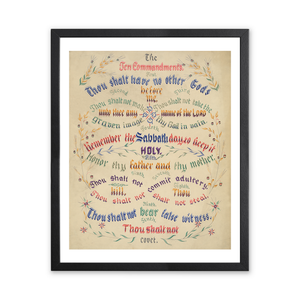
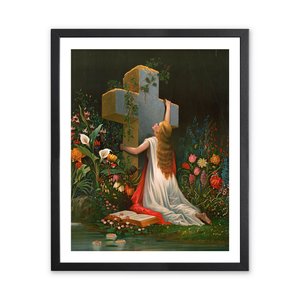
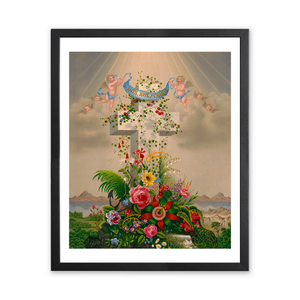
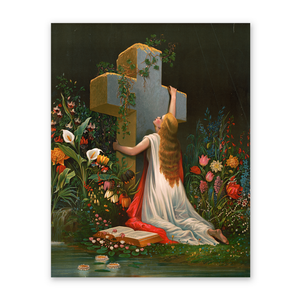
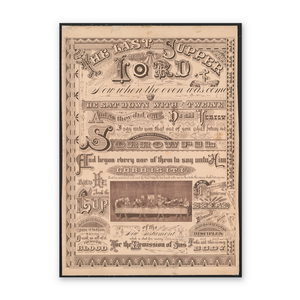
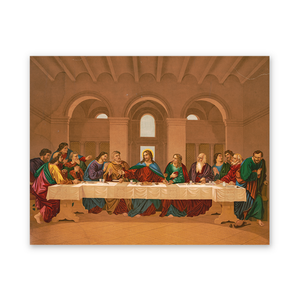
The printed material is the larger body of work. Chromolithographed Sunday school cards, Bible illustrations, memorial prints, temperance imagery, and the enormous nineteenth-century trade in devotional prints for the home. Currier and Ives produced religious subjects in quantity, and every immigrant community imported its own.
For anyone using this material, the labeling is often thin. A church photograph frequently carries no denomination and no location, and identification comes from the architecture rather than the caption.
The tent revival is the mobile version and it is well represented. A canvas tent, sawdust on the ground, folding chairs, a piano and a preacher moving from town to town for a season. The phrase sawdust trail comes directly from it — walking forward through the sawdust to the front was the public act of conversion.
Funerary and memorial imagery belongs here too and it is a substantial trade. Mourning prints with blank spaces for a name and date, cemetery photographs, memorial cards and the whole nineteenth-century apparatus of public grief, which was far more visible then than it is now.
Sunday school and church picnic photographs are the most numerous items and the least regarded. They are also, for many congregations, the only surviving record of who the members actually were.
The Chautauqua Institution deserves a note. Founded in 1874 on a New York lake as a summer training ground for Sunday school teachers, it grew into an enormous program of lectures, music and instruction, and its buildings, tents and cottages are among the most photographed religious sites in the country.


-

 Snapshots of the Past
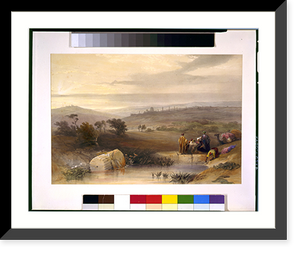
Historic Framed Print Vintage Religious Print - Ten Commandments, 17-7/8" x 21-7/8"
Vintage Religious Print - Ten Commandments, 17-7/8" x 21-7/8" , Image: 16" x 20"Note: Some images may show issues such as color bars or other artifacts from the digital scanning process at the...$57.00 -
 Snapshots of the Past
Historic Framed Print Vintage Religious Print - 7, 17-7/8" x 21-7/8"
Vintage Religious Print - 7, 17-7/8" x 21-7/8" , Image: 16" x 20"Note: Some images may show issues such as color bars or other artifacts from the digital scanning process at the Library. We clean up...$57.00 -
 Snapshots of the Past
Historic Framed Print Vintage Religious Print - 6, 17-7/8" x 21-7/8"
Vintage Religious Print - 6, 17-7/8" x 21-7/8" , Image: 16" x 20"Note: Some images may show issues such as color bars or other artifacts from the digital scanning process at the Library. We clean up...$57.00 -
 Snapshots of the Past
Historic Framed Print Vintage Religious Print - 5, 17-7/8" x 21-7/8"
Vintage Religious Print - 5, 17-7/8" x 21-7/8" , Image: 16" x 20"Note: Some images may show issues such as color bars or other artifacts from the digital scanning process at the Library. We clean up...$57.00 -
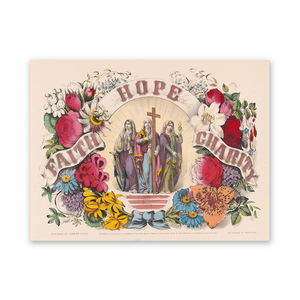 Snapshots of the Past
Historic Framed Print Vintage Religious Print - 4, 17-7/8" x 21-7/8"
Vintage Religious Print - 4, 17-7/8" x 21-7/8" , Image: 16" x 20"Note: Some images may show issues such as color bars or other artifacts from the digital scanning process at the Library. We clean up...$57.00 -
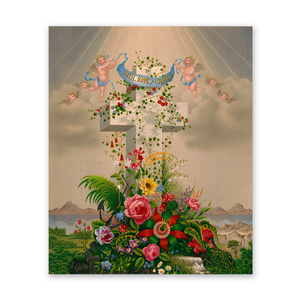 Snapshots of the Past
Historic Framed Print Vintage Religious Print - 3, 17-7/8" x 21-7/8"
Vintage Religious Print - 3, 17-7/8" x 21-7/8" , Image: 16" x 20"Note: Some images may show issues such as color bars or other artifacts from the digital scanning process at the Library. We clean up...$57.00 -
 Snapshots of the Past
Historic Framed Print Vintage Religious Print - 1, 17-7/8" x 21-7/8"
Vintage Religious Print - 1, 17-7/8" x 21-7/8" , Image: 16" x 20"Note: Some images may show issues such as color bars or other artifacts from the digital scanning process at the Library. We clean up...$57.00 -
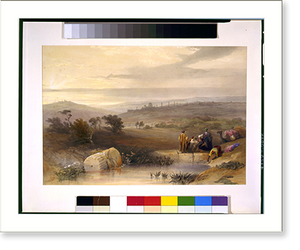 Snapshots of the Past
Black & White Photo - Jerusalem from the North Jerusalem April, 1839
Originally preserved in the Library of Congress, this print of Jerusalem from the North Jerusalem April 1839 is now available for your home or office. The Library has preserved this image as part of...$57.00